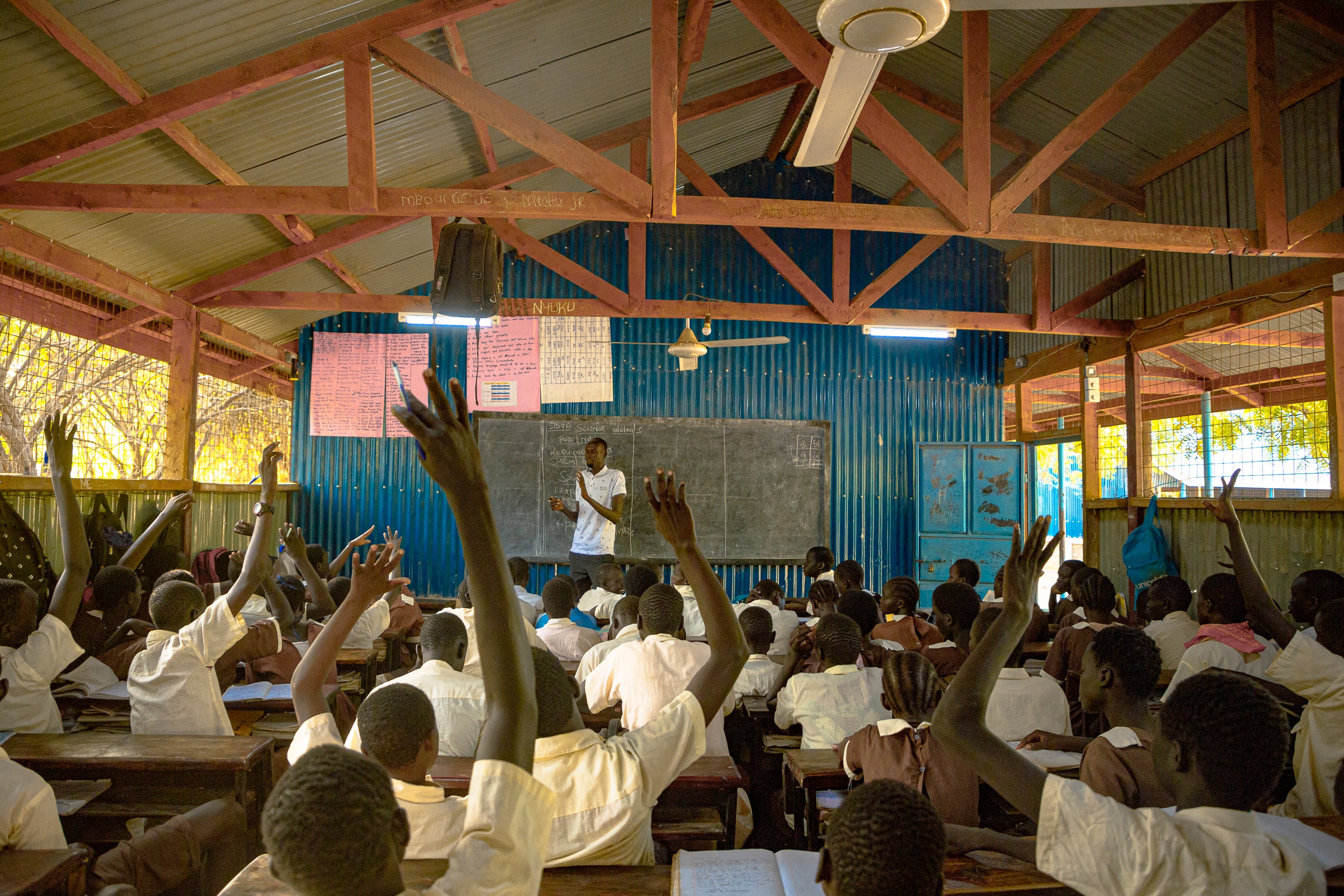
NAIROBI, Kenya Nov 28 – More than 100,000 refugee learners are enrolled in Kenyan schools, with the majority attending primary education, according to a new report by the Kenya National Bureau of Statistics (KNBS).
The 2024 Kenya School Census established that 100,258 refugee learners were registered in basic learning institutions across the country.
Of these, 56,781 were boys, representing 56.6 per cent of the total, while girls accounted for the remaining 43.4 per cent.
Primary schools hosted the largest number of refugee learners, with 81,290 children enrolled at that level.
Secondary schools accounted for 9,148 refugee learners, while 6,228 were in pre-primary institutions.
Another 3,592 refugee learners were attending junior schools.
The report defines refugee learners as children who have been compelled to flee their countries because of conflict, persecution, violence or serious human rights violations and have been formally recognised as refugees.
“Their enrolment in Kenyan schools reflects the country’s responsibility to provide access to basic education to children living within its borders,” said KNBS Acting Director General Benjamin Avusevwa.
The findings also come against the backdrop of the government’s Shirika Plan, which seeks to promote the socioeconomic inclusion of refugees by transforming camps into integrated settlements that accommodate both refugees and asylum seekers.
The KNBS report notes that the initiative is intended to support access to services, including education.
However, the concentration of more than 81,000 refugee learners in primary schools highlights the importance of ensuring that institutions serving refugee communities have adequate teachers, classrooms, learning materials and other facilities.
The census also found that Kenya had 2.7 million learners enrolled in pre-primary schools, 8.29 million in primary schools, 2.43 million in junior schools and 4.32 million in secondary schools.
These figures demonstrate the scale of the country’s basic education system and the demand for resources needed to support different groups of learners.
The KNBS census covered public and private basic learning institutions across all 47 counties.
Its findings are expected to support education planning, policy formulation and the allocation of resources to institutions serving different communities.
