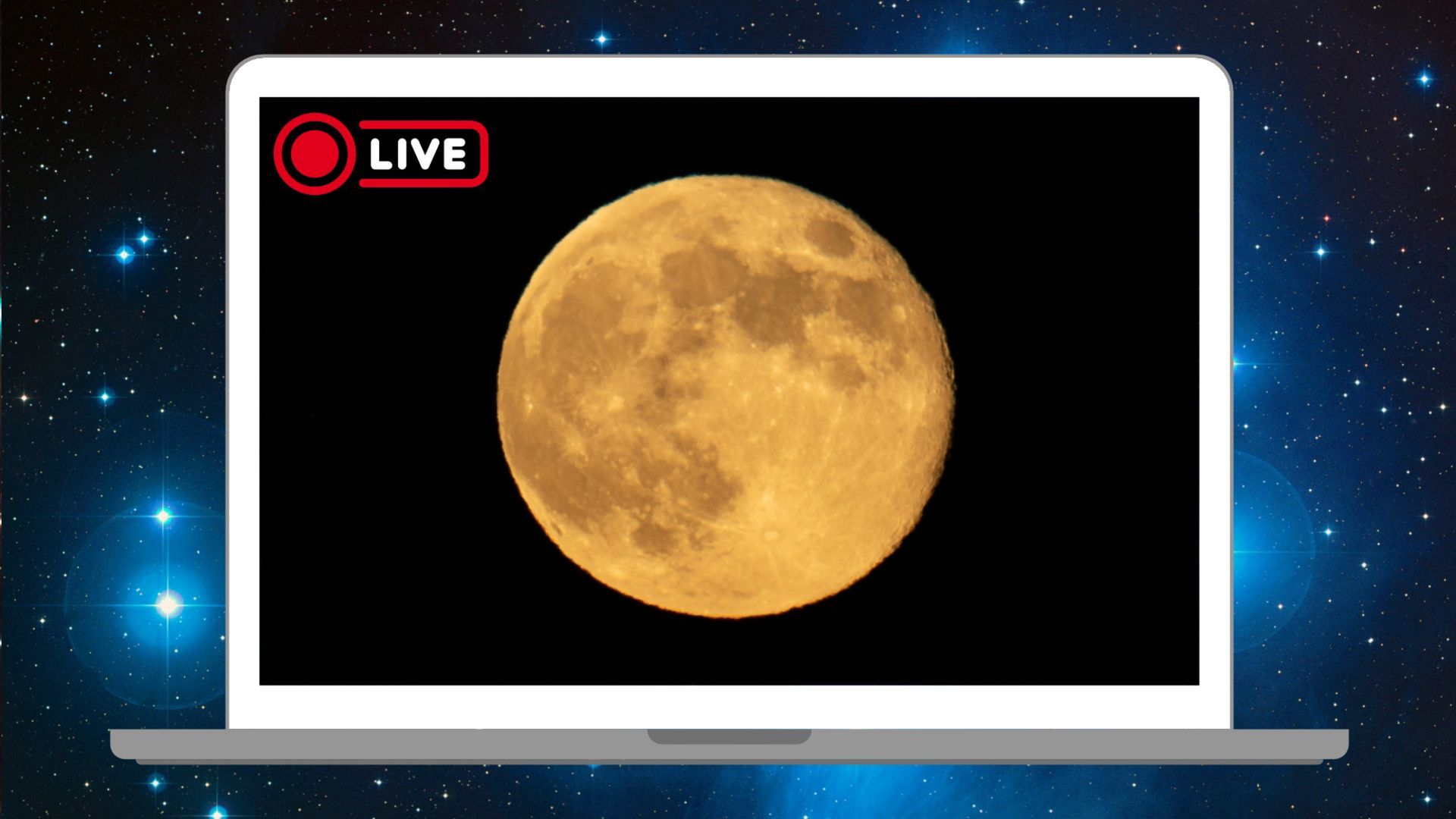
Get ready stargazers! The full "Beaver supermoon" rises in the eastern sky, offering up a spectacular display shortly after sunset tonight (Nov. 24). Here's what you need to know.
November's full moon occurs at 9:53 a.m. EST (1453 GMT) on Nov. 24, as the lunar disk passes opposite the sun in our sky, making it appear fully lit from our perspective. The November full moon is often referred to as the Beaver Moon because it rises around the time the small mammals are hard at work building their lodges in preparation for the winter.
The Beaver Moon is also set to be a dazzling supermoon, because it turns full as the natural satellite passes within 90% of perigee, when it is at its closest to Earth in its 27-day elliptical orbit. A supermoon's proximity can make it appear 30% brighter and 14% larger than the most distant full moon of the year, which is colloquially known as a "micro-moon".
When to see the Beaver Moon
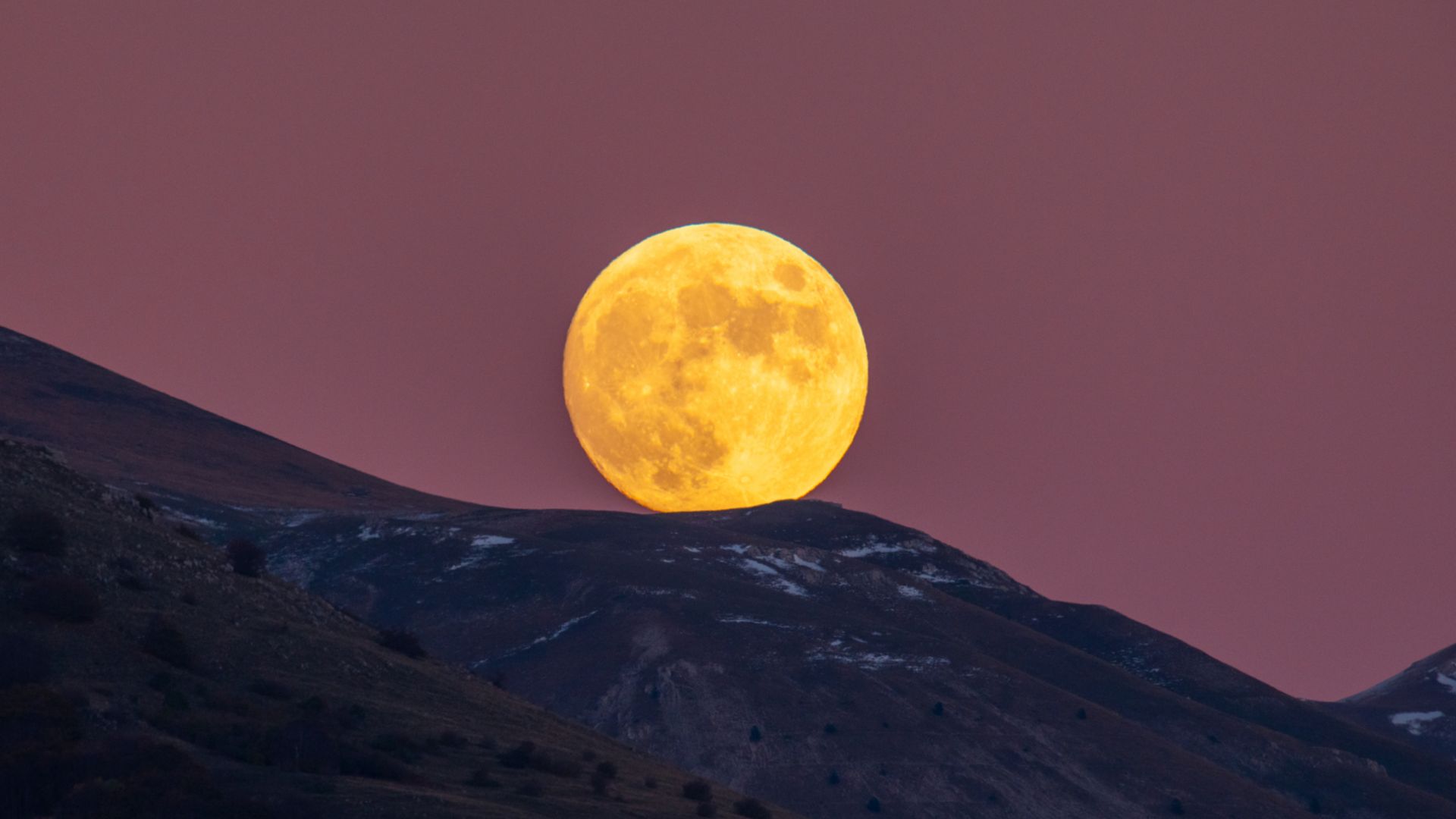
November's full moon will be below the horizon for stargazers in the U.S. at the moment it turns full. Instead, viewers in America should look out for the moon shortly after sunset on Nov. 24, as it looms low over the eastern horizon.
A supermoon can make for a spectacular sight when caught close to the horizon. (Image credit: NASA/JPL-Caltech)Try covering the lunar disk with your thumb to block out the worst of its glare, and you may just be able to spot to blue-white lights of the Pleiades open star cluster glimmering less than 10 degrees away — roughly the width of your clenched fist held at arm's length.
If you miss the full moon on Nov. 24, don't worry as the moon will appear full to the casual observer for a couple more nights, so there's no excuse to miss it! Remember to check out Time and Date's moonrise and moonset tracker for timings specific to your location.
What should I expect from the November supermoon?
You may see the moon turn a striking orange-yellow hue as it rises because sunlight reflected from its disk passes through more of Earth's atmosphere, which scatters shorter bluer wavelengths of light and allows more red and orange light to reach our eyes in a process called Rayleigh scattering.
Celestron Nexstar 4SE(Image credit: Celestron)This is a fantastic go-to telescope with a 4-inch aperture and can help you quickly find a steady view of the moon. Check out our full Celestron Nexstar 4SE review for more.
The supermoon will also appear particularly large while close to the horizon, as a phenomenon called the "moon illusion" tricks our brains into thinking that the lunar disk is larger while in the presence of foreground objects compared to when it is overhead.
It'll make for a breathtaking photo opportunity, which you can capitalize on with our beginner's guide to imaging the full moon, along with our picks of the best cameras and lenses for capturing the night sky.
Editor's Note: If you take a photo of the November full moon and would like to share it with Space.com's readers, then please send your photos and comments, along with your name and location to [email protected].