New York and California Age Gating Rules Go Into Effect in the New Year
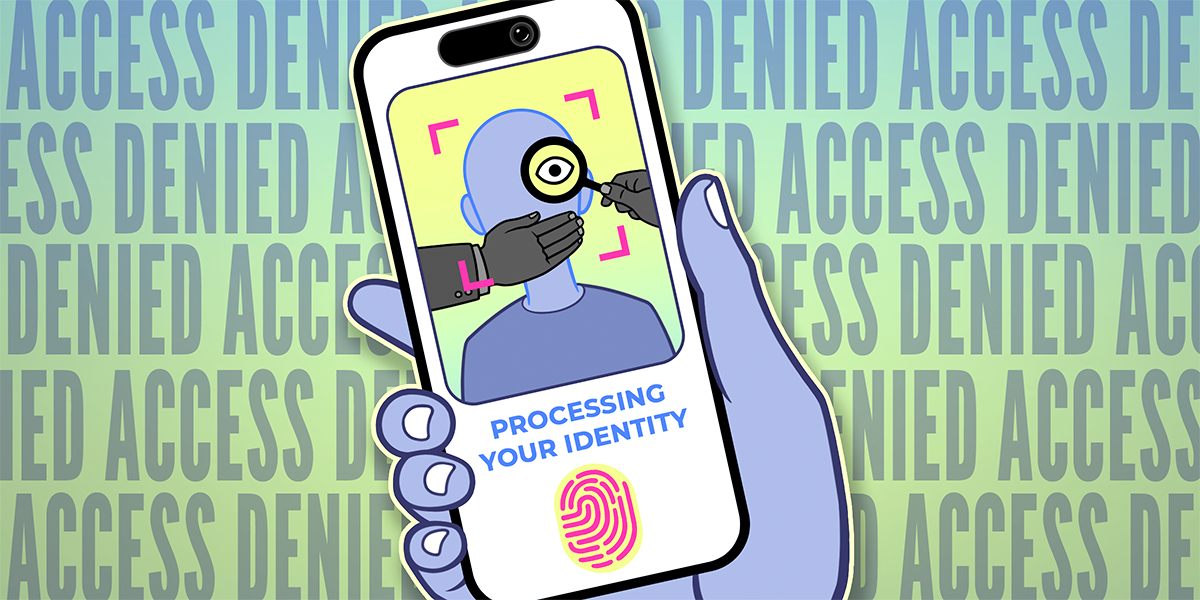
Come January 2027, everyday social media browsing in two of the country's largest states will look noticeably different. In California, AB 1709 (2026), AB 1043 (2025), and SB 976 (2024) are slated to take effect on January 1, 2027. Meanwhile, state attorney general regulations for New York’s Stop Addictive Feeds Exploitation (SAFE) for Kids Act take effect on January 25, 2027.
EFF has opposed these laws across legislatures, regulatory proceedings, and the courts. The core problem is simple: age-gating mandates trade away everyday user privacy and free expression under the guise of safety, while pushing platforms to gather even more personal data on users.
What California’s Rules Say
Three interlocking California laws take effect on January 1, 2027, reshaping how platforms handle age checks and design features for young users. First, SB 976 (2024) requires verifiable parental consent before platforms can offer algorithmic feeds or nighttime notifications to anyone under 18. Second, AB 1709 (2026) goes even further by outright banning "addictive features," including personalized recommendation algorithms, autoplay, and endless scroll, for users under 16, even with parental permission. Third, the Digital Age Assurance Act (AB 1043, 2025) mandates age-assurance checks across devices (operating systems) and apps, serving as the enforcement backbone for those restrictions. Together with the California Attorney General’s proposed rules on SB 976, which outline age-gating methods, accuracy, circumvention, and parental consent, these laws force platforms into a two-tier design that walls young people off from basic content-discovery tools, puts everyone's privacy at risk to prove their age, and has already drawn First Amendment lawsuits from social media companies against both SB 976 and AB 1709.
For example: rather than minimizing corporate surveillance and data collection by passing stronger privacy laws, the SB 976 regulations encourage companies to evaluate behavioral patterns, collected user data, digital interactions, and metadata to estimate age (Sec. 561(a)(2)), alongside location data collected for other purposes (Sec. 565). Good privacy laws should discourage collecting that information in the first place, not reward broader tracking.
At the same time, these age assurance rules build in steep error rates and weak safeguards. They acknowledge that age-verification tools can misclassify young people as adults, allowing false-positive rates of up to 8% for 16-year-olds and 15% for 17-year-olds (Sec. 561(c)(4)(iv)). Yet the rules set no benchmarks at all for false negatives, meaning adults (especially 18- to 20-year-olds) are likely to be wrongly flagged as under 18. They also recognize demographic bias in facial recognition, yet offer no concrete fix, vaguely telling companies to take mitigating measures like correcting dataset imbalances (Sec. 563(a)(6)). While users can appeal wrong age estimates, the rules set no firm deadlines, meaning mistakes can drag on without a prompt fix, blocking user access (Sec. 564). Worse, requiring platforms to let users report others they suspect are under the age of 18 (Sec. 567) invites targeted harassment by bad actors, while rules telling companies to account for users trying to “conceal or misrepresent” their California location (Sec. 565) risk penalizing everyday VPN users.
What New York’s Rules Say
Along the same lines as the California regulations, New York’s SAFE for Kids Act restricts personalized recommendations and nighttime notifications (between midnight and 6am) without required consent, and mandates that platforms run age assurance and determine user location. If a user does not verify their age or is estimated to be under-18, they will either be relegated to an account with no personalized recommendations and nighttime notifications (if the platform creates one), or prohibited from accessing the platform/service.
As we detailed in our December 2025 comments to the New York Attorney General, age-verification mandates inevitably chill access to online speech. And the final regulations introduce several troubling specifics.
The New York regulations use broad definitions for "age estimation," "age inference," and "age verification" (700.1(h)–(j)) that push companies to collect and retain more personal information from users. Even where privacy protections apply to that information, users cannot sue or enforce those rights themselves, since enforcement rests solely with the Attorney General (700.8). Worse, the rule’s definition of deletion appears to let companies "de-identify" age-assurance data and keep using it in that form, potentially feeding AI model training and creating re-identification risks if leaked or stolen. At the same time, platforms are required to hold onto records (including a user's age status and compliance data) for five years, increasing the risk of misuse or breaches (700.7(b)).
Echoing the problems in California, location and accuracy regulations bring further privacy and security risks. The regulations demand that operators must weigh all reliable location information and take reasonable steps to detect user efforts to “conceal or misrepresent” being in New York, which expands location tracking and threatens VPN use (700.2(d)(2)). On accuracy, the rules permit up to a 15% false-positive rate for 17-year-olds (700.1(b)), yet just like the California rules, say nothing about false negatives—meaning adults, especially 18- to 20-year-olds, are likely to be wrongly flagged as under 18. When that happens, the appeals process can take longer than 10 days, leaving misclassified adults locked out of standard features (or platforms altogether) for over a week.
What This Means for Users in NY and CA
Under both states' regimes, many users will be pressed to hand over personal information just to access standard features like personalized feeds or notifications, while social media companies are encouraged to monitor (and monetize) user behavior even more closely. Because these laws define "addictive feeds" so broadly that the label covers virtually every basic recommendation tool (including feeds built from who you follow, posts you like, or topics you say you are interested in), platforms face a stark choice: either build stripped-down versions of their apps without algorithmic feeds, likes, or notifications, or simply boot any account suspected of belonging to someone under 18. Either way, all users, and especially young people across both states, risk being shut out of major online spaces as they exist today.
When young people lose accounts or get pushed into stripped-down experiences, they lose contact with friends, support groups, community organizing, local news, creative audiences, and ways to speak out on current issues. U.S. law has long recognized that people under 18 have their own constitutional rights to speak and receive information, and sweeping age gates directly interfere with those rights.
At the same time, lawmakers often sell age-verification mandates as a way to rein in Big Tech, yet the opposite happens in practice. Megacorporations like Meta and Google have the resources to build expensive age-estimation systems and absorb steep fines (such as $50,000 per violation in California) while they figure out compliance. Smaller platforms and independent communities such as Bluesky or Dreamwidth, however, cannot afford those legal risks or engineering costs. As we have already seen in states like Mississippi, crushing compliance burdens push smaller sites out of the market and drive users back toward the biggest corporate giants. Instead of holding Big Tech accountable, these rules entrench its dominance; leaving everyone with fewer community options, less innovation, and a more centralized surveillance machine.
Help Us Help You
Legislative and regulatory action are setbacks, but they do not settle the debate. If these rules affect you in California, New York, or anywhere else: keep a record while the details are still fresh, and share it with our team at [email protected].
Take screenshots and note the date, time, service, and what you were trying to do; write down what you lost (whether that means an account, a club or volunteer group, contact with friends, local news, or a favorite creator) or note if you chose to walk away from a service rather than submit an ID or personal data. You do not need to hand over sensitive information to show that these rules burdened you. If you hit an age check or parental-consent snag, save what the platform asked for, whether it worked or failed, any privacy promises or laws cited, and any appeal attempts.
If these restrictions get in your way, email EFF at [email protected] and tell us what happened. Tracking real-world lockouts, age-check failures, and infringements on free speech puts us in a stronger position to challenge the worst of these restrictions in legislatures and the courts. At the same time, we will keep fighting for laws that actually make people safer online by curbing corporate surveillance and giving parents, youth, and all internet users meaningful choice and control.
Source Attribution
This story was originally published by Electronic Frontier Foundation.