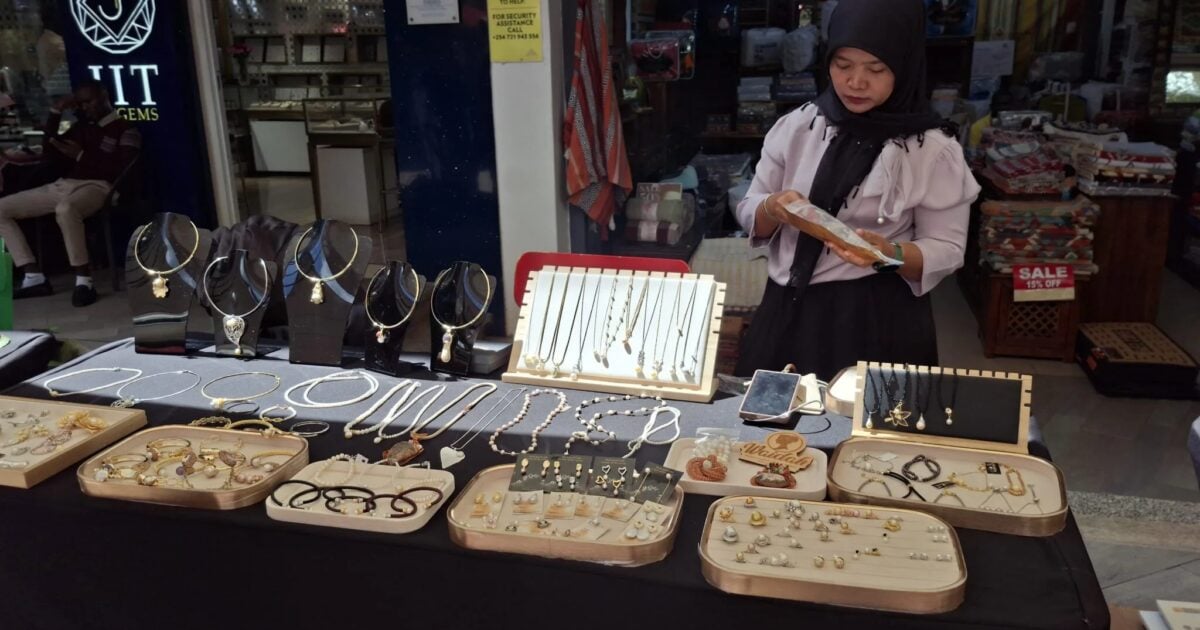
Nairobi, Kenya, Nov 29– Indonesian businesses showcased opportunities in agriculture, pharmaceuticals, aviation, education and consumer goods during a two-day expo in Nairobi, as the country sought to strengthen commercial ties with Kenya while using cultural exchange to introduce its heritage to a wider Kenyan audience.
The Indonesia Nairobi Expo (IndoNEX) 2026, held on November 26 and 27, brought together businesses and institutions from both countries for business engagements, product exhibitions and cultural activities aimed at building partnerships beyond traditional diplomatic relations.
The first day, held at Trademark Hotel, focused on business-to-business engagements, with Indonesian companies presenting products and services across various sectors and exploring opportunities for cooperation with Kenyan counterparts.
Agriculture was represented by PT Solusi Tani Makmur, while Kalbe Farma and Indomie Kenya showcased opportunities in pharmaceuticals and fast-moving consumer goods.
Other participants included Waidah Pearl Lombok in jewellery and Sawae Brands Ltd in textiles.
The education sector was represented by Atma Jaya University Yogyakarta and Perkasa Flying School, which presented academic and professional training opportunities for Kenyans.
Indonesian Ambassador to Kenya Witjaksono Adji said the two-day programme was designed to connect the countries through both commercial engagement and cultural exchange.
“At the Trademark Hotel, we brought together Indonesian and Kenyan business and institutions for the business-to-business engagement,” the ambassador said during the opening of the Indonesian Festival at Village Market on Friday.
“At the Indonesia Nairobi Expo, we explored opportunities to strengthen our trade and our economic partnership and launched negotiations on the Indonesia-Kenya bilateral trade framework.”
The two countries signed a Joint Statement launching negotiations for a Preferential Trade Agreement (PTA), with Kenya’s Principal Secretary for Trade Regina Akoth Ombam and Indonesia’s Director of Bilateral Negotiations Basaria Tiara L. Gaol signing the document.
Trade in goods between the two countries reached approximately USD 691 million in 2025.
The second day shifted the focus from commercial engagements to cultural diplomacy, with an Indonesian Festival at the Village Market Food Court attracting approximately 400 visitors.
The festival featured Indonesian cuisine, music, dance, traditional crafts, fashion and information on education and tourism opportunities.
“Today, we continue that engagement in a different but equally important way. Through this Indonesia Festival, we bring Indonesia closer to the people of Kenya. Not through business meetings, but through our culture, food, music, dance, fashions and traditions,” Witjaksono said.
He described Indonesia’s cultural diversity as one of its greatest strengths, noting that the archipelago comprises approximately 17,000 islands and is home to hundreds of ethnic groups, languages and cultural traditions.
The festival featured modern Indonesian dance inspired by the Pacu Jalur tradition, pencak silat martial arts, Tari Topeng mask dance and Tari Ondel-Ondel, which represents the vibrant culture of Jakarta.
Visitors also sampled Indonesian food and explored opportunities to study in the country through scholarship programmes, as well as tourism opportunities.
A major attraction was the Batik fashion show and hands-on workshops, which introduced participants to one of Indonesia’s most treasured cultural traditions.
Witjaksono said batik was more than a textile, describing it as an expression of Indonesian identity, artistic creativity and community livelihoods.
“Batik is much more than a beautiful piece of fabric. It is an art, a tradition, a source of livelihood and an expression of Indonesian identity,” he said.
He explained that traditional batik making involves artisans using hot wax to draw patterns on fabric before applying dyes to create intricate designs, with the process sometimes repeated several times to achieve the desired result.
In hand-drawn batik, known as batik tulis, every line and pattern is created by hand, making each piece unique.
The designs also carry cultural meanings, with some patterns representing values such as harmony, courage, patience and prosperity.
Indonesian batik was inscribed on UNESCO’s Representative List of the Intangible Cultural Heritage of Humanity in 2009.
More than 60 participants attended the workshops held over the two days, giving visitors an opportunity to experience the craft themselves.
The ambassador noted that despite the geographical distance between Kenya and Indonesia, the two countries shared cultural diversity, traditions, hospitality and a strong sense of community.
“Indonesia and Kenya may be separated by thousands of kilometres, but we share many things in common. We are both proud of our cultural diversity, our traditions, and our sense of community. We also share the values of hospitality and friendship,” he said.
He added that people-to-people connections were as important as business and diplomatic relations in strengthening ties between the two countries.
“Through food, music, arts, and cultural exchange, we get to know one another better, appreciate our differences, and discover how much we have in common,” Witjaksono said.
IndoNEX 2026 was organised by the Indonesian Embassy in Nairobi as part of efforts to expand economic cooperation and strengthen people-to-people relations between Kenya and Indonesia.