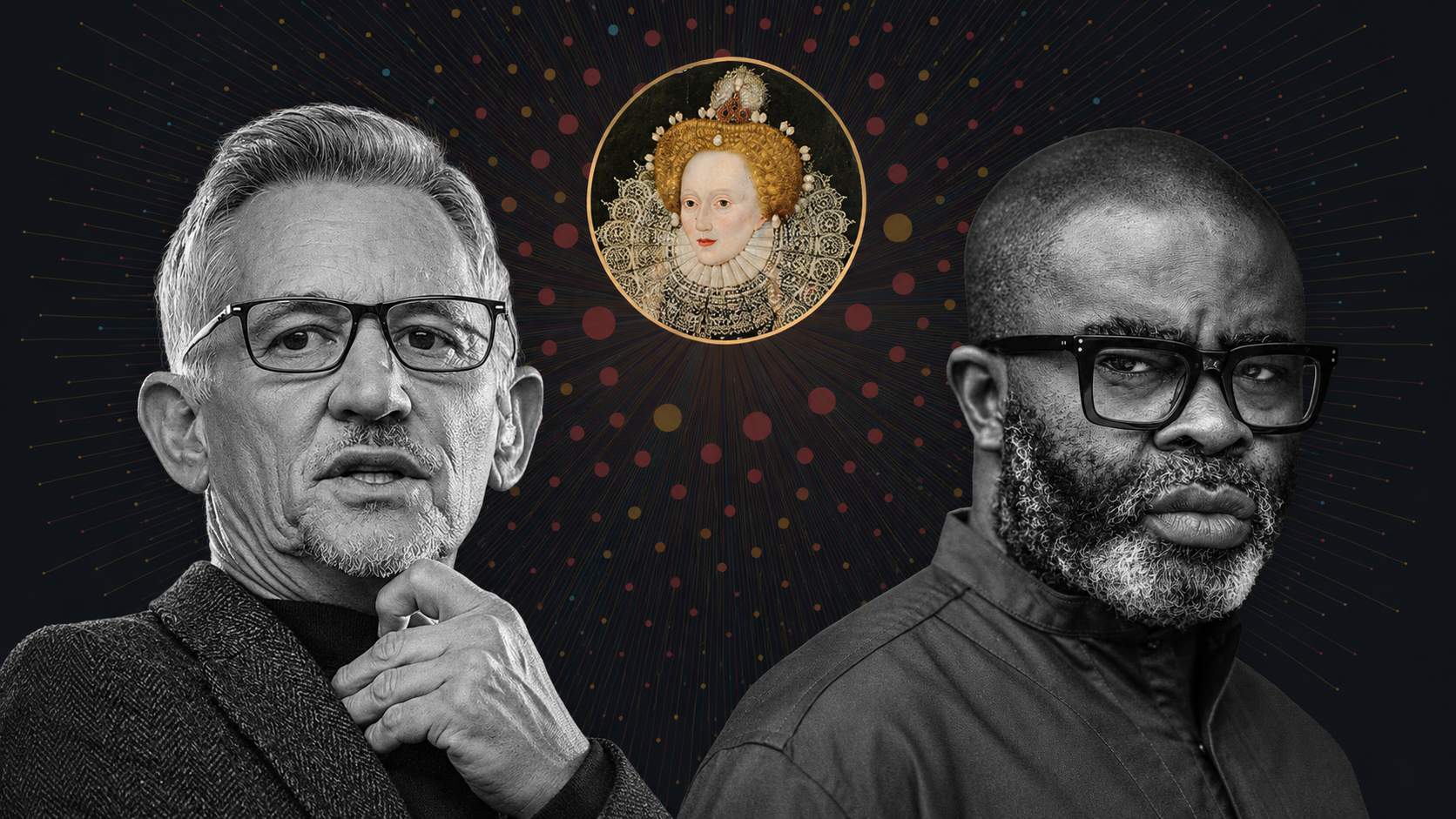
Social media platforms, particularly the micro-blogging site formerly known as Twitter – after it was taken over by Tesla and SpaceX founder Elon Musk – have become a key tool in stoking up 'culture wars’ and ‘cancellations’, in recent years, encouraging personalised and direct attacks on individuals.
These pile-ons can come from any quarter, and victimise various minorities, faiths, and ethnicities – Jews, Muslims, Hindus, women, trans people, those with physical or learning disabilities – but are often aggravated by anonymous social media accounts which can act with legal impunity.
Byline Times has often investigated these online networks in relation to Russian influence operations or public health disinformation during the COVID-19 pandemic. In a new six-month investigation, this publication has analysed a series of campaigns against prominent public figures largely led by an anonymous UK-based account on X: habibi_uk.
Part one of this investigation examines how the disinformation campaigns of habibi_uk work.
A Case Study: Misan HarrimanIn May 2026, photographer Misan Harriman, Chair of the Southbank Centre, was the subject of 38 articles in the UK media during the course of 18 days around what was described as an ‘antisemitism row’, and which amounted to a sustained cancellation campaign.
Harriman is a British-Nigerian photographer and filmmaker, an Oscar nominee, the first black man to shoot a British Vogue cover and, since July 2021, chair of the country’s largest arts venue. When he turned his lens on London’s Gaza marches, he attracted attention of a different kind.
On 9 May, two days after Reform UK won 677 seats in the local elections, Harriman posted a five-minute video to Instagram. The first thing that came to mind, he said, was Susan Sontag’s reflections on the Holocaust: “She said when thinking about the Holocaust, 10% of people in any population are cruel no matter what, and 10% is merciful no matter what and the other – this is important – the other remaining 80% could be moved in either direction.” He called Reform’s gains “a warning and a rallying call”. But said of its voters: “They are not devils.”
At 6.03pm, Heidi Bachram – a Brighton-based writer – posted 57 seconds of the video on X. The Sontag framing was cut, and so was the line about "devils". What remained could be read as a straight comparison. “He compares it to the Holocaust,” she wrote. “This is truly DISGUSTING.”
What happened next can be timed to the minute.
[byline_habibi_story story="harriman"]
On 24 June, Harriman said he would leave his position as Chair of the Southbank Centre in the autumn, at the end of his second term. He and the institution both say that he told the Deputy Chair of his decision to do so in January – four months before the first headline around his Reform comments. The Telegraph’s report of his departure read: “Southbank Chief in Antisemitism Row to Stand Down a Year Early”.
The coverage of Harriman's Reform comments had run for 35 days. Byline Times logged 56 press items on Harriman in that time, both friendly and hostile. Two-thirds of the articles were published by just three newspaper groups: the Telegraph – 18; The Times – 16; and the Mail – three.
Beneath the Telegraph’s article, a paid subscriber commented on 21 May: “Ask Mossad to deal with it. We can’t.” It received 10 likes and was still visible six months after it was first published.
“I’m very recognisable,” Harriman said. “I’m a public figure, and the Telegraph now has its readers posting things like that.” Truth, he observed, “is always optional in these sorts of smear campaigns, but it does lead to readers, real human beings, commenting and posting genuine threats to life.”
The anonymous X account @habibi_uk had been attacking Misan Harriman by name and job title for almost a year before the first article appeared.
The Lineker FileIt had happened before. A year before the storm over Misan Harriman, Gary Lineker left the BBC after reposting a video about Zionism that carried a picture of a rat. He deleted it and apologised.
Byline Times went back through the same network’s posts.
Thirty-four of its accounts have named him 210 times since November 2022 – with the earliest hostile posts two-and-a-half years before the picture of the rat that cost him the BBC. A fifth of them were by @habibi_uk. They were all seen in total 7.8 million times.
[byline_habibi_story story="lineker"]
What Does Habibi_UK Do?The account at the centre of this story guards its anonymity best of all: @habibi_uk.
It joined X in April 2015. Its profile photo is a coronation portrait of Queen Elizabeth I. Its location given as “The Realm”. Its bio consists of the line the monarch is said to have scratched on a window beneath one of Sir Walter Raleigh’s: “If thy heart fails thee, climb not at all.”
Who is Habibi? Part Two - Coming Soon
Be the first to find out more about the identity of this prolific and influential account by joining our mailing list
Sign up for our newsletterIts profile shows more than 42,000 posts in the 10 years since 2015.
It routinely calls opponents of the war in Gaza “racists”, “hate marchers”, and “antisemites”. It reserves a particular contempt for Jews who oppose the war. It called Stephen Kapos – a child survivor of the Holocaust in Hungary – a “Jewish fig leaf”, the “token Jew” of what it brands the “hate marchers”, and then simply a “stain”. It called for Palestine Action to be proscribed on 28 January 2025 – five months before the Home Secretary acted – and has described the group’s activists as “racist vandals” in 546 posts since June 2021.
Anonymity has not kept it out of print. @habibi_uk has been cited as a source in at least 14 press articles since June 2020, in outlets including The Independent, the Evening Standard, the Mirror, the Jerusalem Post, and the Times of Israel. It has been credited for photos in the Telegraph.
The Henry Jackson Society’s November 2022 report on unrest in Leicester cites it in nine endnotes. The think tank’s July 2023 report “Britain’s New Blasphemy Police?” cites it four more times and, on its acknowledgements page, thanks “Wasiq Wasiq and Habibi for their expert feedback and review”.
The account’s email address carries a “harryblog” marker – a reference to Harry’s Place, a blog started in November 2002 that has published 20,723 posts, ten million words, under headings such as: Antisemitism, Islamism, and Israel/Palestine. Its busiest year was 2011, with 2,462 posts. In the first nine months of this year it published 33.
Harry’s Place is a private website, outside the registers of companies and charities. Its owner is unnamed, its finances are private, and its two visible sources of income are a donations button and Google adverts. For years, it reprinted posts from the Community Security Trust’s blog, and the journal of the Israel advocacy body BICOM had an account of its own on Harry’s Place.
[byline_habibi_story]
A writer named “habibi” first appeared on Harry’s Place with a guest post on 22 October 2008. It published 536 posts on the site until May 2025. It presented itself as an authority on Islamist extremism, with “David Toube and ‘Habibi’” as the blog’s two principal contributors. Harry’s Place’s own X account has boosted @habibi_uk 279 times. Byline Times has established that the blogger and the X account are one and the same.
Only once has the mask slipped – in a courtroom. On 30 March 2021, a High Court master ordered Twitter to disclose the details behind the account to a claimant, Professor David Miller. The operator was not publicly named.
@habibi_uk had been attacking Misan Harriman in posts for almost a year before the first article about his Reform comments appeared. He was not alone. Byline Times read through the account’s output and recorded every person it named in at least three posts: 700 people. Each was coded by how the account treated them: attacked, criticised, or mentioned in passing.
Who Amplifies Habibi_UK?It appears spontaneous to the outside eye: a spasm of algorithm-fuelled fury that flares, burns for a day or two, and dims.
Sometimes the newspapers stoke it; sometimes they start it. Byline Times set out to map the origins of the campaign against Misan Harriman and 11 other public figures who have been critical of Israeli policies in Gaza and defending the rights of Palestinians and other issues.
Fifteen accounts produced 53% of the posts attacking them. The two biggest authors are both anonymous: @SubversiveForce, with 274 posts; and the account it boosts most, @habibi_uk, with 250.
On X, a repost exploits a second follower list, and amplifies posts on these lists double that of a simple 'like'. The algorithm boosts replies, and quote tweets boost by ten times. It also deprioritises a post after 48 hours, so a reliable partner account is critical to give it a head start. @SubversiveForce has boosted @habibi_uk 1,151 times; @habibi_uk has reciprocated 785 times. and they have posted within the same minute 174 times, twice what chance would predict. They write differently – two anonymous voices – but they are an operational unit.
[byline_habibi_story story="amplification"]
The anonymous core. The accounts accuse freely. @JoosyJew calls Green Leader Zack Polanski, who is Jewish, “the traitor within”; @MsPurpleX calls him “the token Jew”. @never_again2020 calls Nadia Sawalha an “unhinged antisemite”; and named posts of Owen Jones’ mother: “Now we know where he gets ‘it’ from.”
@vampywitchy calls Francesca Albanese “one of the new Nazis”. A fifth, @GnasherJew, names people: its website has published 147 exposés since 2021, on doctors, teachers, and other professionals, and its name is a registered trademark in a class for political lobbying.
The named amplifiers. Thirty-three accounts carry a person’s name and produced 42% of the posts. Heidi Bachram leads them: the rest have boosted her 4,371 times, the most for any account, and her 83 posts on the 12 drew 4.8 million views. It was her edit of a video that set off the storm over Misan Harriman.
Approximately half of the 33 are working journalists and commentators: among them Stephen Pollard and Jake Wallis Simons, both former editors of the Jewish Chronicle; and Nicole Lampert, who writes for the Mail and the Jewish Chronicle. Others hold office: Robert Jenrick can carry a charge from X into Parliament, as he did with Harriman; Alan Mendoza is executive director of the Henry Jackson Society, whose research cites @habibi_uk; David Toube is general counsel of the Jewish Leadership Council and boosted @habibi_uk 694 times – more than any other named account.
The Private rooms. Four people have told Byline Times of a WhatsApp group mainly consisting of journalists. Lampert described it herself in the Jewish Chronicle in October 2022: “JTwitter” – with its “sizeable wins” over a theatre, a social media company, and Jeremy Corbyn’s Labour. “You’ll see us in JTwitter out in the open,” she wrote. “Less openly are the private messenger groups… thrashing out ways to respond to new challenges, discussing ideas.” And: “Sometimes it can also be hard to keep up with who hates who.”
The Press. Byline Times counted at least 428 items critical of one or other of the 12 in a handful of papers: 235 in the Telegraph; 107 in The Times; 35 in the Mail; 34 in the Jewish Chronicle. Thirty-four writers have such items on two or more of the 12: Wallis Simons on eight, Pollard on six, Danny Cohen on four.
Byline Times has analysed the social media accounts involved and the people they have targeted. This analysis does not take a position on whether or not the content of the attacks or criticisms is either accurate or legitimate, but merely seeks to map how it operates.
Byline Times will soon publish more details of the UK resident our evidence has identified as the person behind the habibi_uk X account.
Who is Habibi? Part Two - Coming Soon
Be the first to find out more about the identity of this prolific and influential account by joining our mailing list
Sign up for our newsletterIf you have any information for this investigation, do contact us in complete confidence at [email protected]