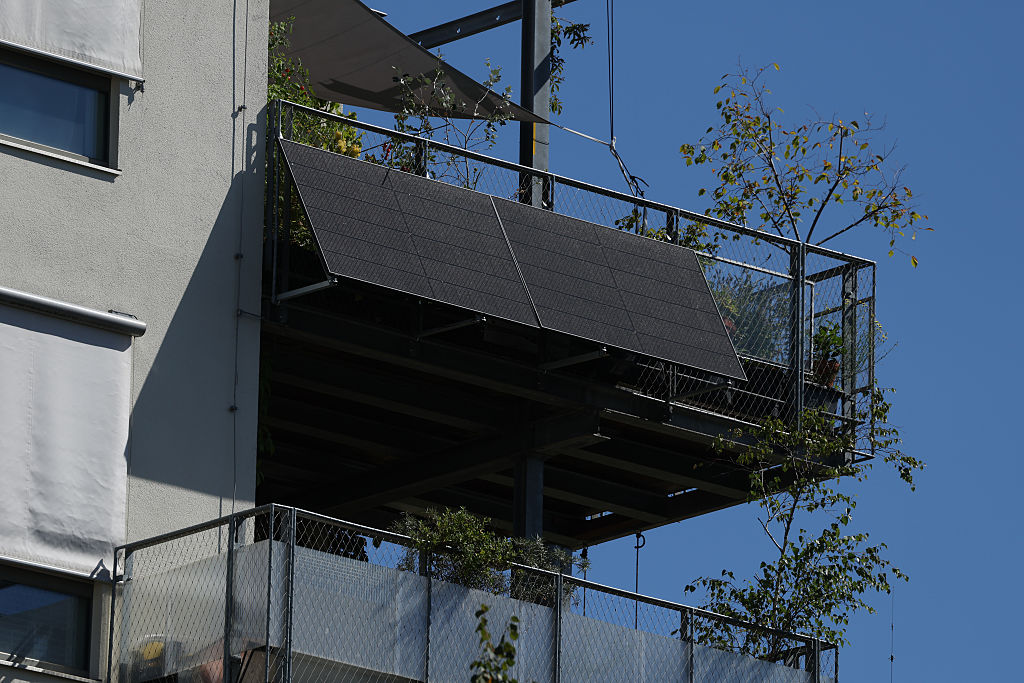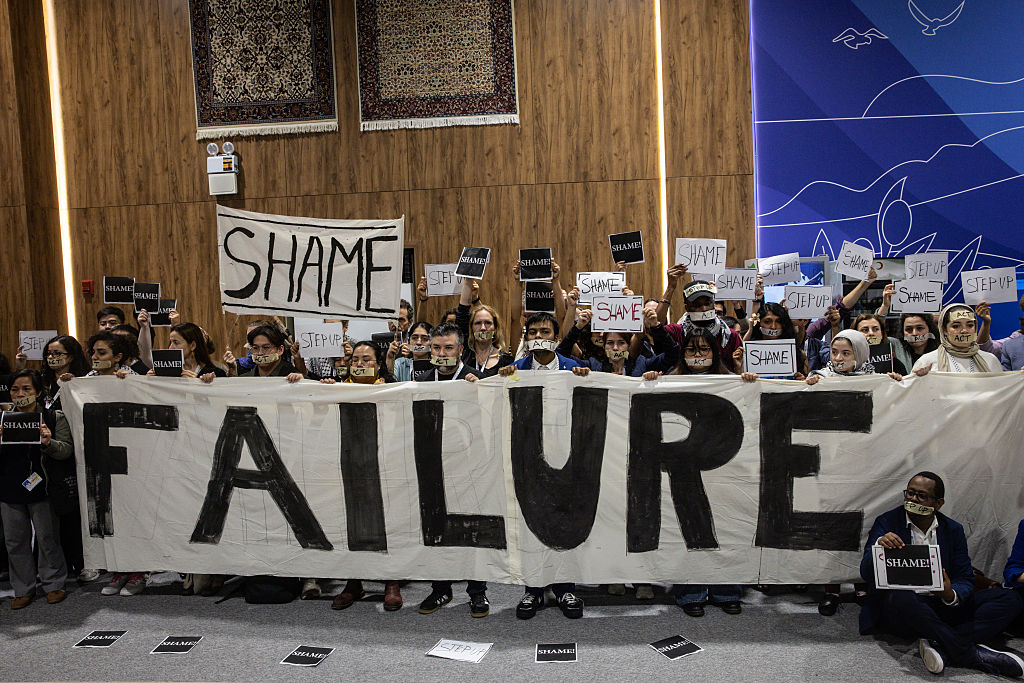
COP31, the UN’s annual climate summit, closed in Antalya, Turkey, on 22 November without a political agreement, after dozens of countries rejected a final text that made no direct reference to fossil fuels.
The summit may be remembered as one of the most significant failures of international climate diplomacy in history. Equally concerning is the growing culture of greenwashing by omission on display in Antalya, where governments showcased renewable energy initiatives, net zero targets and claims of climate leadership - all the while conveniently overlooking the domestic policies and fossil fuel investments that directly undermine them.
Inside the Blue Zone
The official COP31 contributors briefing listed 93 pavilions for member states and 137 spaces for UN agencies, intergovernmental organisations and NGOs in the Blue Zone – the area of the summit that hosted the formal negotiations alongside government meetings, media activities and events.
While some pavilions were relatively modest, others were elaborate, purpose-built structures with impressive architectural designs, large digital screens, presentation areas, meeting spaces and hospitality facilities.
Whatever their size or budget, many pavilions – including those of established and aspiring petrostates – shared a common goal: selling an environmentally friendly and sustainable image of their country that was often far removed from reality. For delegates, the experience resembled an international travel show more than a climate conference.
Clean Energy Showcases and Carbon-Neutral Claims
The disconnect between climate crisis rhetoric and continued fossil fuel expansion was particularly striking at the UK pavilion. Hosting events that proclaimed a “nuclear revolution”, promoted the 35x35 Global Electrification Pledge – which aims to raise electricity’s share of global final energy consumption to 35% by 2035 – and showcased international low-methane partnerships, the UK presented itself as a global leader in clean energy and climate cooperation.
UK Pavilion at the COP31 UN climate summit in Antalya, Turkey. Photograph by Stuart SprayThis carefully cultivated image stood in stark contrast to Government policy at home. In October 2026, the Labour Government approved the Jackdaw gas field in the North Sea, granting fresh production consent after the original approval, issued by the Conservative Government in June 2022, was ruled unlawful. Labour also faces continued opposition from climate campaigners, including from within its own support base, over its refusal to rule out oil and gas development at the Rosebank field.
The EU pavilion championed “just transitions” and “climate ambition”, while the bloc’s wealthy member states resisted providing the direct finance urgently demanded by countries in the Global South to adapt to climate impacts.
Japan’s promotion of sustainable infrastructure and Germany’s messaging on industrial transformation offered similar narratives of progress, which skirted both countries’ continued reliance on fossil fuels.
With the US Government absent following its withdrawal from the Paris Agreement, the pavilion of America Is All In, a coalition of US states, cities and businesses, attempted to project continued American momentum on renewable energy, even as Washington dismantled federal climate commitments.
Venezuela Pavilion at the COP31 UN climate summit in Antalya, Turkey. Photograph by Stuart SprayVenezuela, the United States’ second-largest supplier of crude oil, produces between 330 and 370 million barrels a year, which will generate an estimated 140 to 160 million tonnes (Mt) of carbon dioxide (CO2) when burned. Despite this substantial carbon footprint, the South American state proclaimed itself “A carbon-neutral country”, with infographics and 20cm-tall letters across the entrance to its pavilion.
Rwanda’s Wetland Park and Lake Kivu Oil
According to the World Meteorological Organisation, Africa is already paying the price of the climate crisis, with increases in severe droughts, water shortages, extreme flooding and food insecurity. These impacts were absent from the displays and messaging of several African national pavilions.
The centrepiece of the Rwandan pavilion was the Nyandungu Urban Wetland, which delegates were told had been transformed from a degraded industrial and agricultural zone into a 121-hectare urban eco-park, funded by a green investment programme.
Rwanda Pavilion at the COP31 UN climate summit in Antalya, Turkey. Photograph by Stuart SprayNyandungu is a worthwhile project, but its prominence at COP31 arguably distracted from a more urgent issue: oil and gas beneath Lake Kivu.
The lake lies within the Albertine Rift, one of Africa’s most important biodiversity hotspots, and supports around 15 fish species found nowhere else in the world. Its fragile ecosystem is now under threat after the discovery of 13 potential oil and gas reservoirs beneath the lake in early 2025.
The Rwandan Government is preparing to negotiate deals with international drilling companies in March 2027 to confirm and exploit the finds.
Uganda, Tanzania and the East African Crude Oil Pipeline
The Ugandan and Tanzanian pavilions presented both countries as wildlife-rich wildernesses, their walls adorned with images of elephants, lions and buffalo. Uganda’s display also highlighted its renowned mountain gorillas, a symbol of the country’s natural heritage. Digital screens showed wetlands alive with wildlife, offering an idyllic vision of an African wilderness seemingly untouched by the modern world.
In speeches outside the pavilion halls, however, the Ugandan and Tanzanian Governments strongly defended their right to develop fossil fuel export industries.
At the heart of those ambitions is the 1,443km East African Crude Oil Pipeline (EACOP), which, when operational, will transport 89.8 million barrels of crude oil a year from Uganda’s Lake Albert oilfields across Tanzania to the port of Tanga for export. Backed by TotalEnergies, the China National Offshore Oil Corporation and the national oil companies of Uganda and Tanzania, the project has attracted criticism over its environmental and human impacts.
With construction nearing completion, communities along EACOP’s route are already feeling those impacts. Investigations by Human Rights Watch and other researchers have documented the loss of farmland, inadequate or delayed compensation, displacement and declining household incomes.
A study of resettled households in Uganda published in November 2026 found that food security had deteriorated sharply, with the proportion of food-secure households falling from 50.7% before resettlement to just 11.9% afterwards.
Tanzania Pavilion at the COP31 UN climate summit in Antalya, Turkey. Photograph by Stuart SprayIn Tanzania, pastoralist communities have raised concerns over the loss of grazing land and the erosion of traditional livelihoods. Recent satellite analysis has identified extensive vegetation clearance and threats to ecologically sensitive habitats, including 44 protected areas.
Climate activists in Uganda and Tanzania are regularly arrested and detained for speaking out against EACOP.
Tanzania is also negotiating a $42 billion liquefied natural gas project with Equinor and Shell to develop offshore reserves estimated at 47.13 trillion cubic feet.
Indonesia’s Climate Justice Forum and New Oil and Gas Blocks
At the Indonesian pavilion on 16 November 2026, Ary Sudijanto, deputy for climate change control and carbon economic value governance at Indonesia’s Ministry of Environment, gave the keynote address at a forum titled ‘Emerging Climate Justice: Shaping Just Transition through Global Experience’. In it, he called for climate justice to go beyond policy aspirations and the administrative requirements attached to individual projects, and to become an integral principle guiding the planning, financing and implementation of the transition to a low-carbon economy.
“Climate ambition must create a transition pathway that people can follow, benefit from and trust,” he said. “We cannot ask vulnerable groups to bear the costs of the transition without support, opportunities or involvement in decision-making.”
Indonesia Pavilion at the COP31 UN climate summit in Antalya, Turkey. Photograph by Stuart SprayBut less than a week earlier, Indonesia had offered investors four oil and gas exploration blocks covering more than 33,900km2.
Laode Sulaeman, the energy ministry’s director general of oil and gas, said: “To increase investment while maintaining national energy availability in the future, the energy ministry continues to offer working areas to encourage oil and gas exploration and development, which are expected to increase national production and add new reserves.”
Indonesia’s Forest Fires
Indonesia is also facing one of its most severe forest and peatland fire seasons in recent years, which has put the Government’s land-use decisions, commercial concessions, plantation regulation and enforcement of environmental protections under scrutiny. According to the European Union’s Copernicus Atmosphere Monitoring Service, fires across the country had released an estimated 733 Mt of CO2 by mid-November 2026.
Although prolonged drought, the El Niño weather pattern and rising temperatures associated with climate change have intensified the fires, the underlying causes are deforestation, land clearing for commercial agriculture – particularly oil-palm and pulpwood plantations – and the drainage of peatlands.
In September 2026, a coalition of Indigenous organisations, environmental groups and residents affected by recurring fires in West Kalimantan brought legal action against Indonesian President Prabowo Subianto’s Government and other national and local authorities. The coalition, which includes Nafas Kalimantan Barat (Breath of West Kalimantan), the Indigenous Peoples Alliance of the Archipelago, Laman Puyung Indonesia and local activists, accuses the authorities of failing to prevent recurring fires, adequately monitor commercial concessions, coordinate emergency responses and protect communities from exposure to toxic smoke.
Given the gulf between governments’ climate rhetoric and their continued support for fossil fuel expansion and environmentally destructive projects, it is little surprise that the Antalya talks ended without a political agreement. Until climate promises are matched by meaningful action, COP summits are likely to remain little more than elaborate exercises in greenwashing.