Since September, South Korea’s financial sector has been hit by a rolling wave of cyberattacks, with regulators counting 40 incidents at 37 financial firms, including banks, brokerages, insurers, savings banks and crypto exchanges. Researchers traced the September attacks to Artex, an AI-powered tool that automated the intrusions.
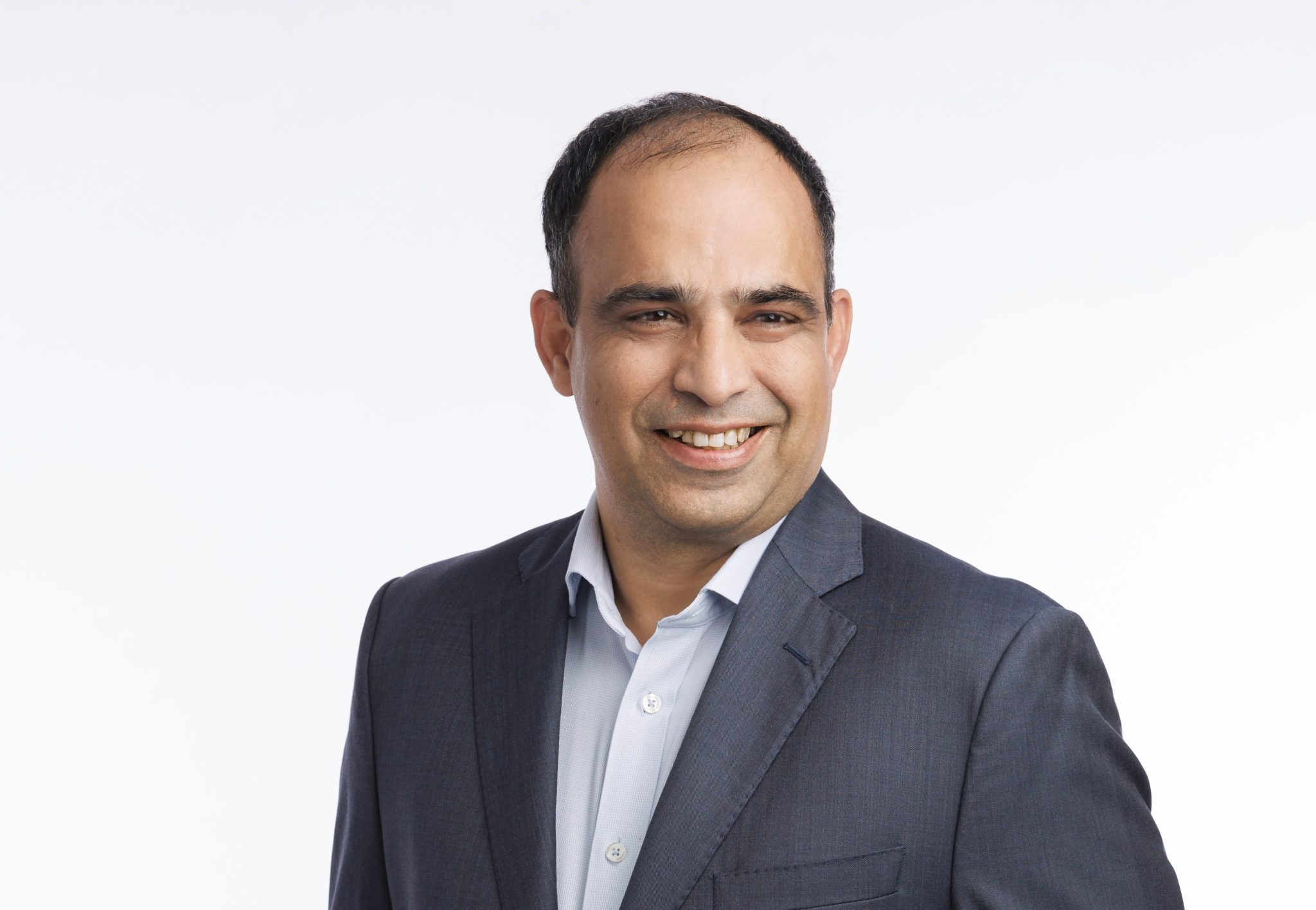
“With the velocity that cyberattacks are happening, it is a matter of when rather than if,” Praveen Raina, head of group operations and technology at Singapore’s Oversea-Chinese Banking Corp. (OCBC), tells Fortune.
For banks, trust may now come not from preventing any and all attacks, but from detecting, closing and repairing them faster. “I wish I could prevent them—and we’ll try—but what we can control is having the right processes so that we can react quickly to whatever happens,” Raina says.
His strategy consists of two elements: cybersecurity and resilience. “We’re leveraging AI for cybersecurity,” he explains. “With agentic AI attacking organizations, humans cannot keep up with it… it’s the nature of the beast. So, we’re building a defensive AI wrapper around the bank to protect it.”
His team also regularly conducts red-teaming exercises: structured simulations in which a group acts like a real-world attacker to improve their ability to react in the event of a hack. “We practice a lot among ourselves and with other industry players,” Raina says. “We also have a bug bounty program for white hackers to identify [security] issues in exchange for a reward.”
Building in-house
Raina joined OCBC in 2008 as its SVP in group operations and technology, after spending the early years of his career as an IT consultant to telcos and enterprise software firms in Canada. (OCBC was founded in 1932; Today, it is Singapore’s second-largest bank, and ranks No. 13 on Fortune’s Southeast Asia 500 list.)
In his first year at OCBC, while spending the holidays away from home, Raina amassed a small team to build an iPhone-native banking app. “The tech team was a lot smaller then,” he says. “We didn’t have a deep expertise in building things, and instead mostly bought [our tech solutions] from vendors and implemented them. As the world changed around us, we made it a point [to develop in-house expertise].” (The final product, launched in 2008, was the first digital banking app debuted by one of Singapore’s three local banks: OCBC, DBS and UOB.)
From then on, Raina’s team—which today consists of roughly 600 to 700 employees—started building almost everything in-house. “It gives us better control of things, and we can do more and faster releases,” he explains, adding that failing “over and over again” adds to the joy of creation.
In July, OCBC launched its Avatar Banking app, which allows clients round-the-clock access to AI-enabled virtual relationship managers. The entire process from ideation to release took four to six weeks, Raina says. “It was an unplanned pregnancy,” he says. “We just happily stumbled upon the idea, and worked every day to generate ideas to see what we could do [to bring it to life].”
The new app was initially launched as a beta version to just fifty customers, but Raina says he’s preparing to onboard all the bank’s private wealth clients onto the platform by the first quarter of 2027. (On the app, users can pick between two virtual wealth managers: a man named Wayne and a woman named Wendy.)
“The white glove service is always important, and we are not taking that away,” says Raina, who also heads up the tech division at the Bank of Singapore, OCBC’s private banking subsidiary. “The point is, if I wake up at 3 a.m. and want to look at what’s happening with my portfolio, who do I go to? At that time, even if you call your relationship manager, they will likely not pick up.”
The quantum frontier
Experts estimate that “Q-Day”, the day quantum computers will be able to crack traditional encryption, will happen around the year 2030. Raina expects a Y2K-style crunch, with every institution competing for the same vendors at the last minute. OCBC is trying to get ahead by training over 100 quantum-literate staff, and running pilots with universities and ST Engineering.
“When we go into our mobile banking app, our phone sends a signal to the OCBC data center, and there’s a handshake happening and a key is exchanged to verify our identity,” Raina explains. “The issue with quantum computing is that it’s so powerful that it can break those keys… so the security layer is gone.”
Raina compares quantum technology today to AI in the pre-ChatGPT era. “It’s a theoretical field, which we aren’t experts in, so we partner with universities to get a better understanding of the technology stack,” he says. “We are building [quantum security] for the future; we don’t need it today, but when the technology comes to life on Q-Day, we will be ready.”
Ultimately, banking is a trust-based business, and Raina sees it as his role to upkeep the faith that users have in OCBC. “People work and they put their life savings with the organization—there’s no bigger trust than that,” he concludes. “We as an organization have to do our part to ensure that everything is protected.”
This story was originally featured on Fortune.com