- In today’s CEO Daily: CEOs have mixed feelings about Huang’s comeback.
- The big leadership story: Gwynne Shotwell, the billionaire who really runs SpaceX, faces her next test.
- The markets: Nvidia shares fell in premarket trading after Monday’s Huang-inspired rebound.
- Plus: All the news and watercooler chat from Fortune.
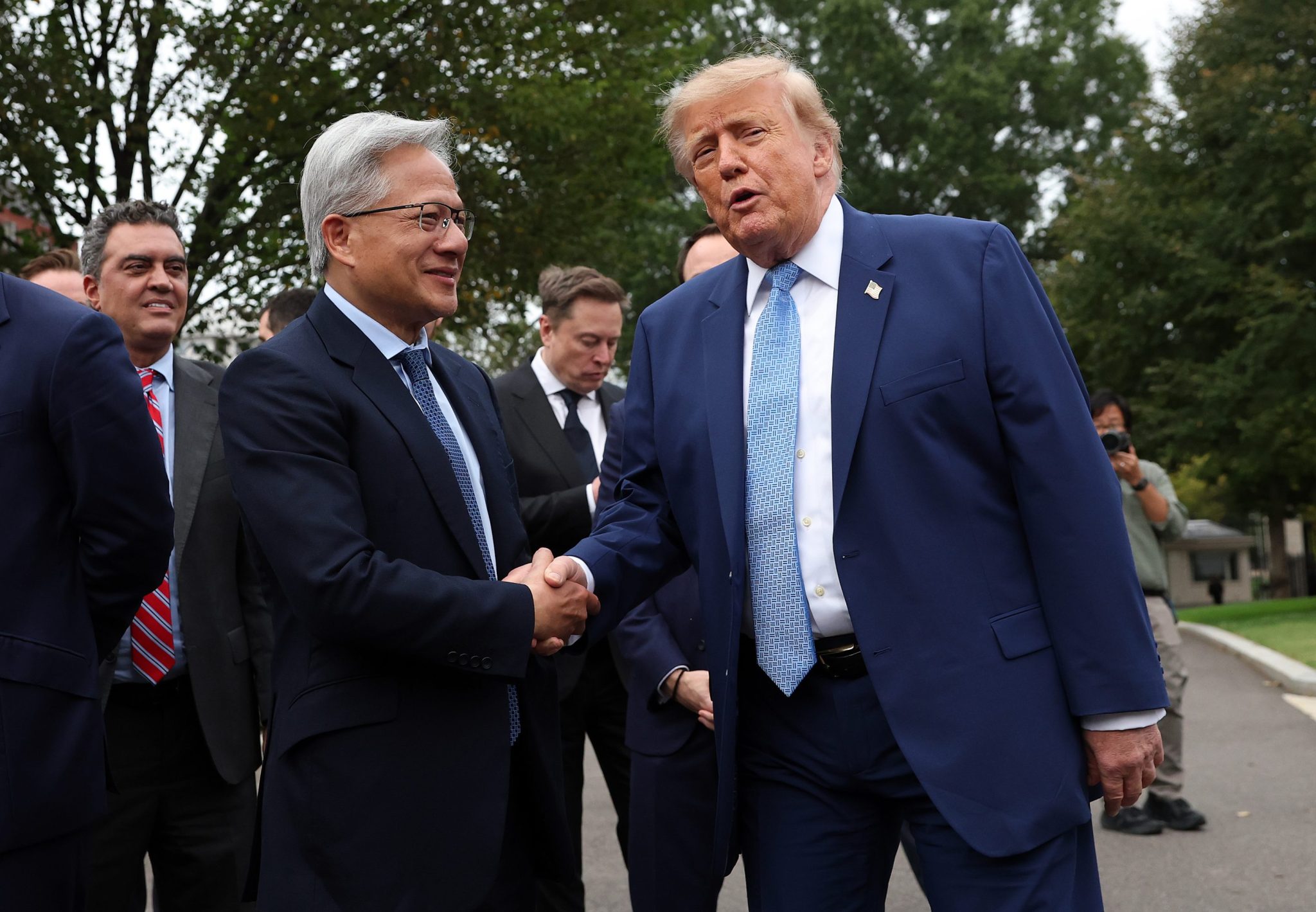
Good morning—or should I say, good grief? Jensen Huang’s 11-day timeout ended yesterday as Nvidia’s board unanimously reinstated him as CEO, having last week rejected his offer to return. Investors cheered, sending the stock up 30% on the news, although S&P 500 futures already pointed to a rebound in the market. His colleagues cheered, perhaps for fiscal rather than emotional reasons amid allegations that their old boss often belittled them—and slept with a direct report. Elon Musk declared that “the mistake has been corrected” while fellow X influencer Bill Ackman wrote that “the wisdom of the crowd prevails.” And President Donald Trump took credit for the move, with a spokesman telling Fortune “we have to protect our geniuses.”
If you felt a pit in your stomach at hearing the news, you’re not alone. Even the prediction markets didn’t spot this one coming as Huang faces a plethora of probes, investigations, lawsuits, and questions over whether he compromised national security, misled investors, violated corporate policies, and more. When the scandal first broke, several leaders told me Huang had to go, even though it might trigger a selloff. Nvidia remains a cautionary tale on the perils of an unchecked CEO and an ecosystem that relies too much on one player to sustain everyone else’s success. But that concentration of power and the intensity of the global AI race also created a compelling case to bring Huang back.
I reached 14 Fortune 500 and Global 500 company leaders yesterday, four of whom are women, to get their anonymous take. A few themes emerged:
A bad look for brand America. One leader called it “an embarrassment for our country to see how far we’ve dropped as a role model in leadership.” Another CEO argued that Trump’s involvement gave Americans more proof of the crony capitalism they just voted against, giving a new Congress more reason to investigate and regulate. Several suggested checking to see if any officials traded Nvidia stock in advance of the news, given the president’s penchant for making money on the job. One non-U.S. CEO was especially disappointed that Treasury Secretary Scott Bessent extended an olive branch after initially taking a tough stance against Nvidia, arguing it suggests that “even U.S. security and rule of law can now take a back seat to profit.”
A mixed look for brand AI. In an industry that’s struggling to show Americans the “good” in AI, one leader noted, this is yet another step in the opposite direction. Another take from a prominent CEO: “Now there’s proof of systemic risk because the power is concentrated in such a small group of people who rely on each other’s capital and technology for success.” A leader in the AI space acknowledged “a cult of personality” around Huang but said the investor panic over his exit reinforces how critical he is to Nvidia and America’s AI race against China: “You have to sometimes make shitty decisions, but without him, we’re in a bad place,” they said. “It’s not worth the risk.”
A bad look for Nvidia. Leaders were especially critical of the board for failing to have a succession plan and for reversing its stance amid mounting investigations. Several were blunt when I asked if Huang should have been reinstated: “No. The guy (allegedly) slept with a direct report. End of story.” Another pushed back when I used the term “prodigal” to describe Huang, saying “that would imply he’s repentant.” And one CEO pondered the message this gives to Huang’s colleagues, including the women who dared to speak up about his alleged affairs. It will also be harder to fire future leaders who have inappropriate relationships and anyone who was fired in the past now has grounds to sue.
The apparent lack of consequences for Huang bothered several leaders, with one calling it a “troubling precedent,” noting that “when an executive is deemed indispensable, accountability becomes negotiable.” As one CEO put it: “I liked Lloyd Blankfein’s mentioning of de Gaulle’s quote that ‘the graveyards are filled with indispensable men.’” All signals point to a return to the status quo, with Huang going back to his “founder mode” of having 60 direct reports. Interim CEO Colette Kress can go back to being CFO, where she’s facing an SEC investigation into accounting practices. But some things do change. An Nvidia customer told me yesterday that the business relationship will continue but “there’s never going to be the same trust.”
Contact CEO Daily via Diane Brady at [email protected]
This story was originally featured on Fortune.com